Spilhaus Space Clock For Sale
SOLD 9/10/10

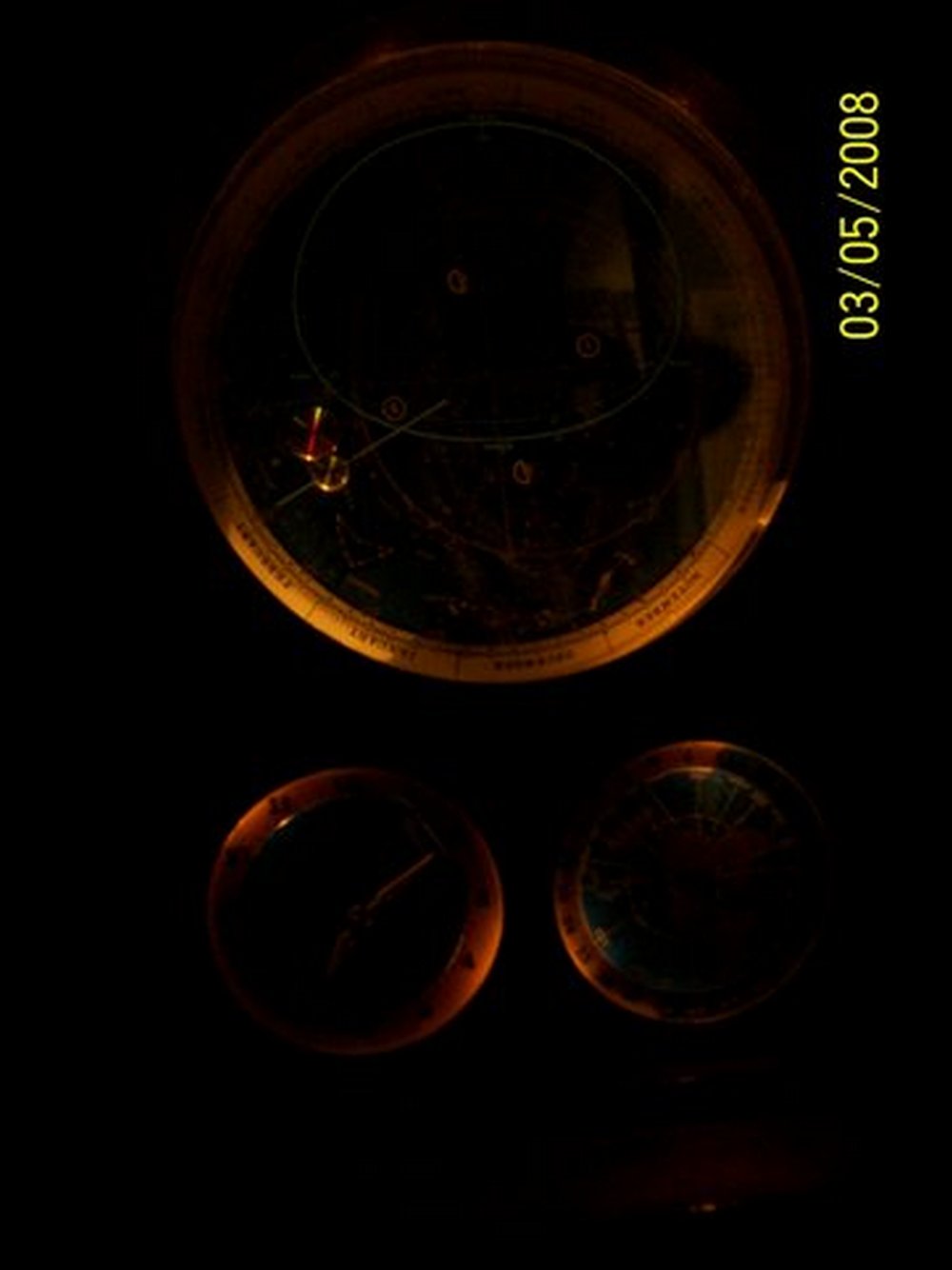
This is a rare Spilhaus Space Clock designed by Dr. Athelstan Spilhaus and produced under license by Edmund Scientific from 1964 until the early 1970s.
This is the fabulous Spilhaus Space Clock. It was designed by Dr. Athelstan Spilhaus, Dean of Technnology, University of Minnesota (from 1949 to 1967). Dr. Spilhaus was the inventor of the bathythermograph, an invention which contributed substantially to America's submarine warfare success in WW II. Dr. Spilhaus had many areas of interest including oceanography and meteorology. The lower left dial shows regular
time; the lower right dial is a 24 hour clock which shows the time in various major cities around the world. The large Space Dial of the Spilhaus Space Clock presents a
variety of important celestial information. From the large space dial you can read these 15 up-to-the minute facts:
1. The Horizon And The Visible Heavens
2. The Sun's Position In The Sky.
3. The Moon's Position In The Sky
4. Position Of The Stars
5. Relative Position Of Sun, Moon, And Stars
6. A Perpetual Calendar Showing The Current Month And Day
7. Solar Time Of Sun, Moon, And Stars At Meridian
8. Sidereal Or Star Time.
9. Current Phase Of The Moon
10. Time Of Daily Sunrise And Sunset
11. Mean Time Of Moon Rise And Moon Set
12. Mean Time Of Star Rise And Star Set
13. Current Time Of High Or Low Tide
14. Current Stage Of The Tide
15. Mean Solar Time At The clock's Location
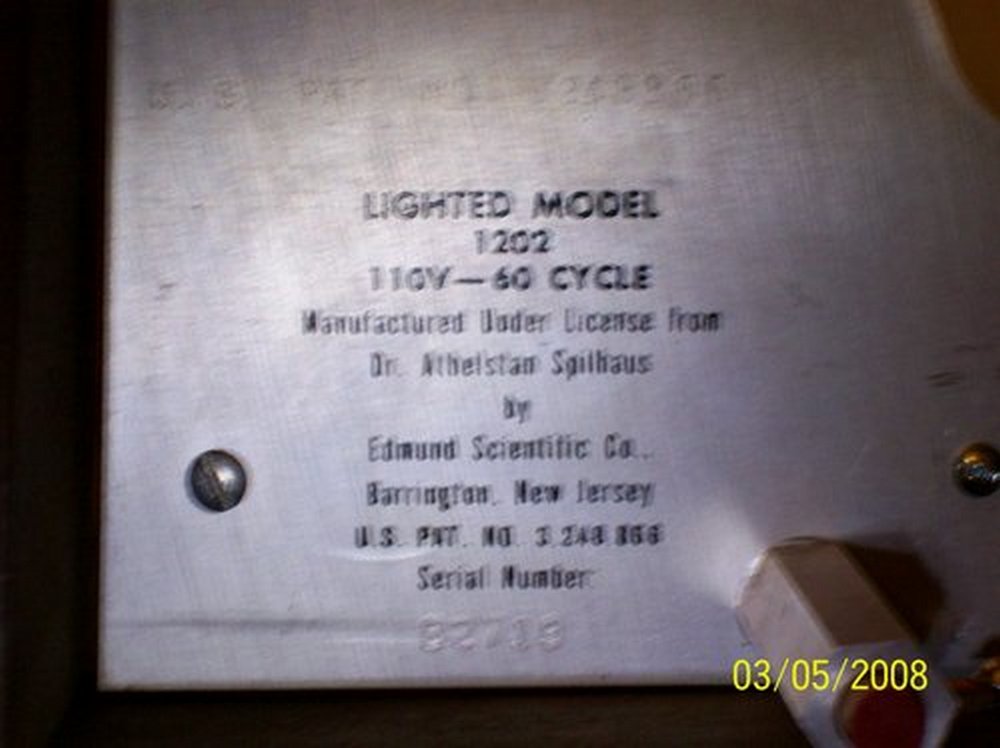
This clock is in running condition and keeps accurate time. I have four other Spilhaus clocks (NOT FOR SALE!) and I have run this clock next to my other ones for weeks and it is keeping perfect time. I have replaced four of the original nylon gears with delrin replacements made by Micro Precision Parts Manufacturing, a company that can make all of the gears for this clock - http://www.precisionmicromachining.com/index.html. The other four gears are the original nylon and are not cracked or broken - a common problem with these clocks. It is the lighted Model #1202, serial number B2719. The lights work - the sockets they fit into are rubber and have enlarged due to age. As such, the light bulbs are a little loose when they are slid into the socket. I had to put a thin folded piece of foil along one side of the light bulbs to get them to make contact (I had to do this on one of my other clocks and it has worked fine for months). The button in back that turns the light on was missing. This "button" was a 2" long piece of acrylic housed in a hexagonal aluminum tube and was glued to the push switch. I replaced it with a wooden dowel that works perfectly. It can be seen in the lower right of the picture of the ID information.
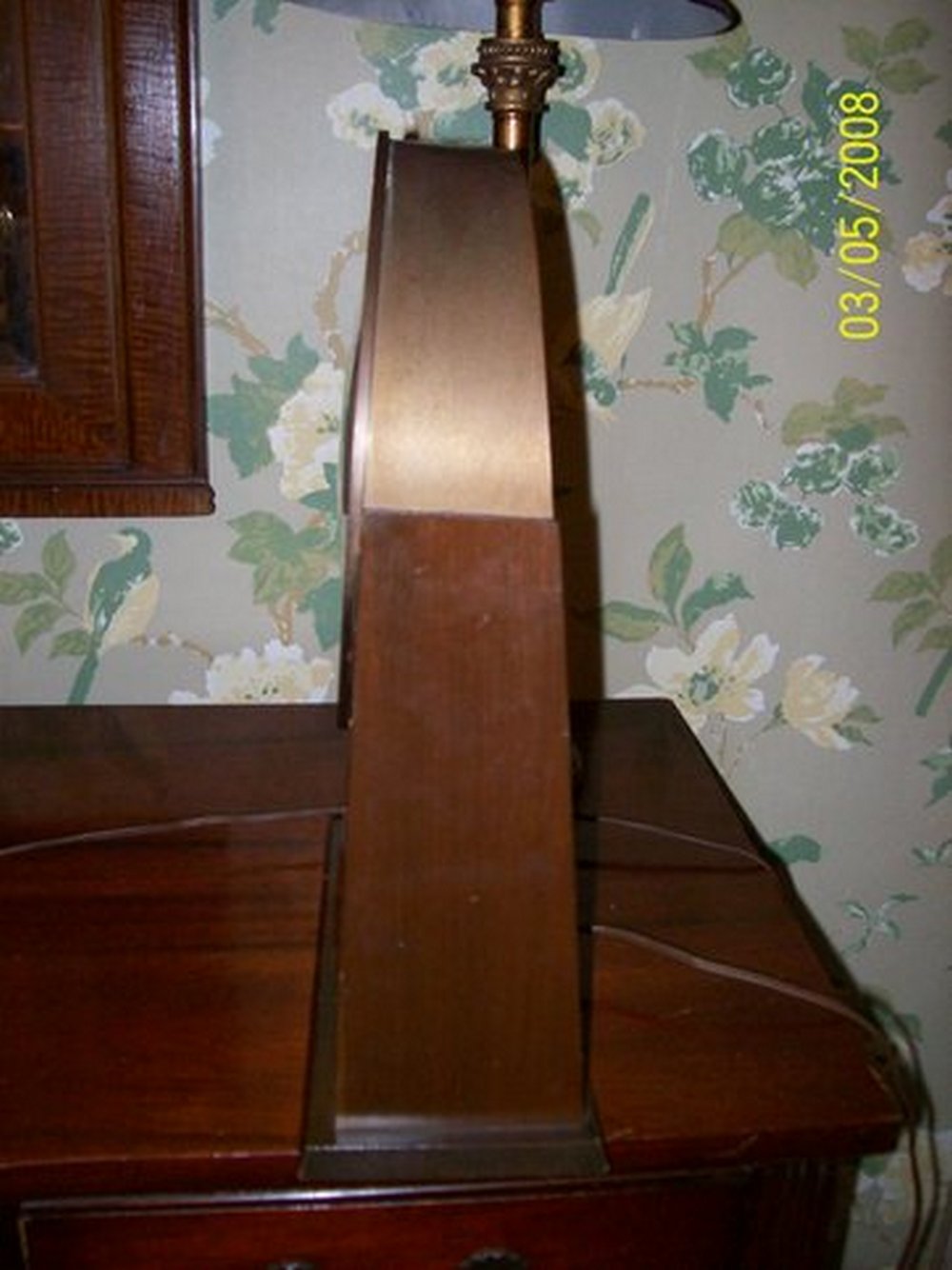
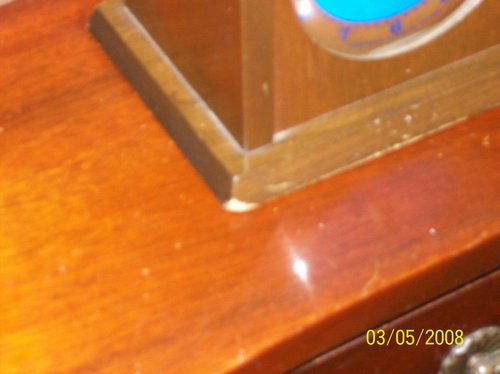
The corners on the cabinet are dinged (see pictures) and there are a few dings elsewhere on the cabinet. These are not really noticeable unless you are looking at it up close. There is a scratch on the left side (as you face the front of the clock) that wouldn't show up in a picture. The brass is aged with a nice patina - I did not polish it since some people like this look. You can polish it if you prefer bright brass. The original large glass was missing but I have replaced it. The curvature of the domed glass is slightly different than the original, but no one would notice unless they were told.

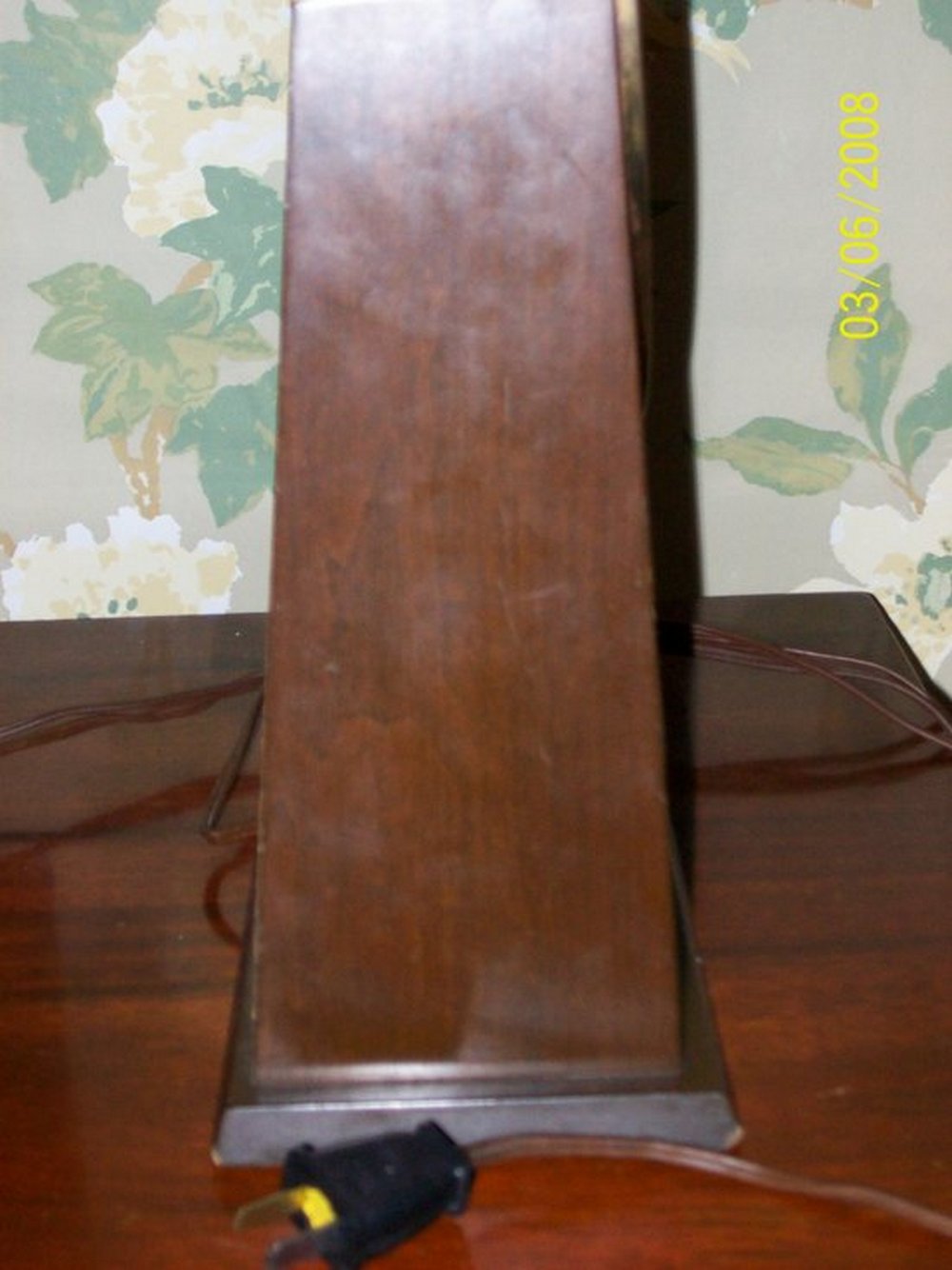
In the picture the power cord has a replacement end. I have since replaced the power cord with a new cord that looks identical to the original.
Sorry, I do not have a user's manual for this but there is one online at the Sands Mechanical Museum website - link below.
This will be packaged according to the directions given on the Sands Mechanical Museum's website at http://www.sandsmuseum.com/misc/spillhaus/repair/spilhausrepair.html The package is 13 1/2 pounds, 15 1/2" X 16 3/4" X 20 3/4" and you can get a quote for shipping via the U.S Post Office, UPS, or FEDEX
Updated September 1, 2010